
Study Guide Addendum: Armando Heredia’s Machine Learning: The Arc of Dystopia
Purpose: This study guide provides frameworks for analyzing the thematic depth, literary techniques, and socio-political commentary within each section of Armando Heredia’s poetry collection. Use these prompts for close reading, discussion, and critical reflection.



Study Guide Addendum: Armando Heredia’s Machine Learning: The Arc of Dystopia
Purpose: This study guide provides frameworks for analyzing the thematic depth, literary techniques, and socio-political commentary within each section of Armando Heredia’s poetry collection. Use these prompts for close reading, discussion, and critical reflection.
Section I: Pass It Down
(Includes: The Ladies at the Station, Daytime Monsters, New Plantations, Not To Belabor the Point, My Fellow Americans)
- Key Themes: Erosion of national ideals (Liberty, Hope, Charity); normalization of bigotry & authoritarianism (“monsters”); exploitation under systems of power (immigration, labor); hypocrisy in nationalism & religion; cyclical oppression.
- Literary Devices: Extended metaphor/allegory (Statue deportation, monsters); biting irony/satire (“It’s not racist, it’s about the economy”); repetition for emphasis & dread; juxtaposition (ideals vs. reality); biblical & historical allusion.
- Discussion Questions:
- How does Heredia use personification (Liberty, Hope, Charity) to critique contemporary American policies and attitudes? What is the significance of their location “at the station”?
- Analyze the evolution of the “monster” imagery in “Daytime Monsters.” What does their visibility and the focus on “little monsters” reveal?
- “New Plantations” draws a direct parallel between chattel slavery and modern immigration detention/labor. What specific mechanisms of exploitation does Heredia highlight? How effective is this comparison?
- Examine the use of repetition and rhetorical questioning in “Not To Belabor the Point” and “My Fellow Americans.” What tone does this create, and what argument is it advancing about societal complacency?
- How is religious imagery weaponized or critiqued in “My Fellow Americans”? What is the significance of trading “the God who made you / For the god you made”?
- Contextual Notes: Consider historical echoes (Jim Crow, Manifest Destiny, immigration quotas) and contemporary debates (border policies, economic inequality, Christian nationalism).
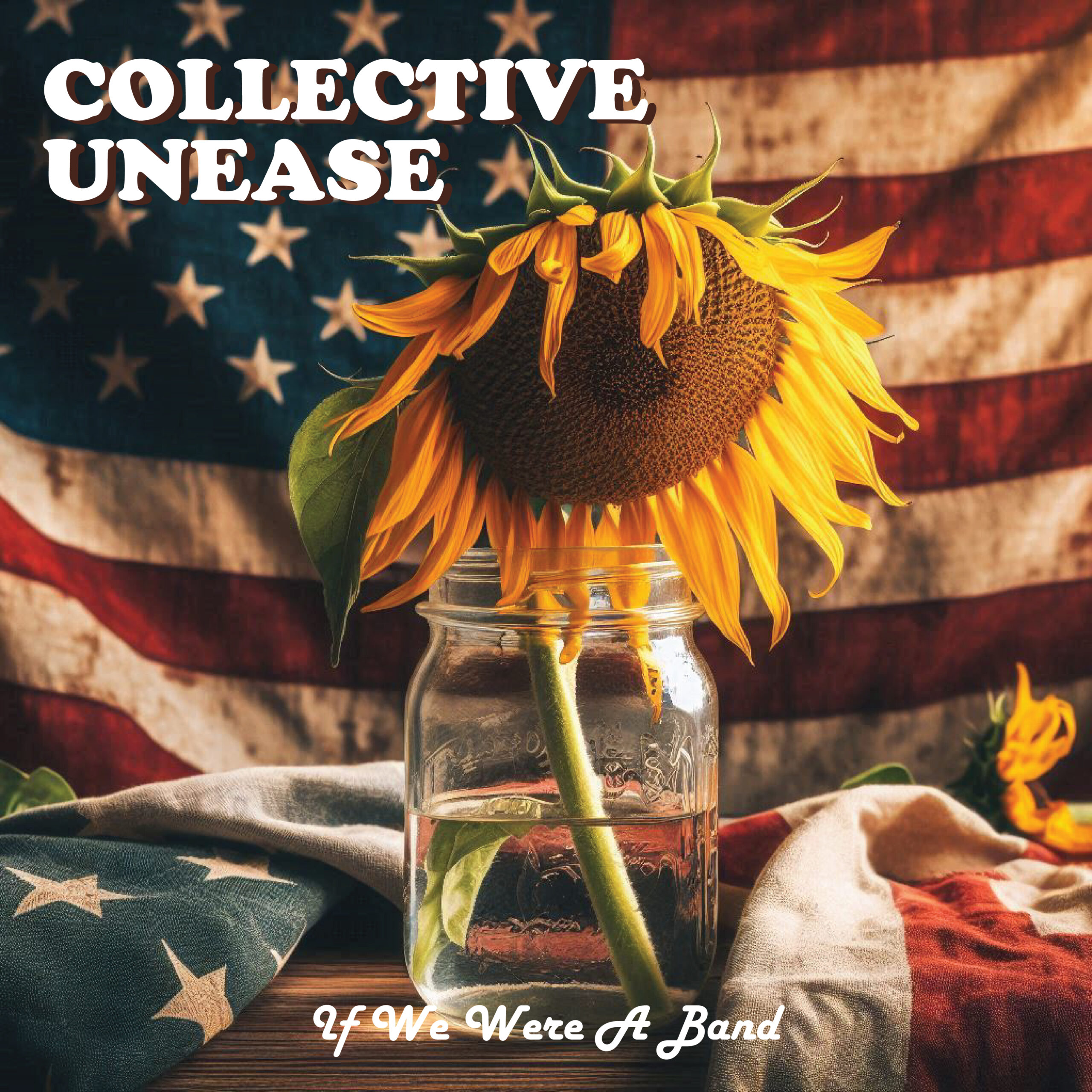
Section II: Collective Unease
(Includes: Incendiary Remarks, A Little Fragile, Americore, The Magnum Opus, Can’t Win For Losing, Stained Glass Heart, Trudge, We’re All A Little Anxious, Collective Unease)
- Key Themes: Psychological toll of societal dysfunction (anxiety, depression, isolation); performative masculinity & toxic nationalism (“Americore”); systemic barriers & economic despair; resilience amidst brokenness; manufactured division & its consequences; the pervasive feeling of societal dread (“collective unease”).
- Literary Devices: Psychological imagery (“tourniquet around your neck,” “Trudge”); satire of American exceptionalism (“Americore”); metaphors of fragility, art, and struggle (“Stained Glass Heart,” “The Magnum Opus”); stream-of-consciousness & fragmented thought (“We’re All A Little Anxious”); refrain as societal diagnosis (“Collective Unease”).
- Discussion Questions:
- How does “Incendiary Remarks” depict the cause-and-effect relationship between inflammatory rhetoric and societal violence? What is the significance of the “tourniquet” metaphor?
- Analyze the critique of historical and contemporary white supremacy/fragility in “A Little Fragile.” How does Heredia connect past actions (“hoods,” “crosses”) to present manifestations (“red hat,” “flagstika”)?
- Deconstruct the character of “Americore.” What facets of American identity and power dynamics does this persona embody? How is imperialism internalized?
- Contrast the defiance in “The Magnum Opus” with the despair in “Can’t Win For Losing” and “Trudge.” What do these different perspectives reveal about the lived experience within the “Arc of Dystopia”?
- How does “Stained Glass Heart” transform the concept of brokenness? What role do “truth” and “love” play in this metaphor?
- “We’re All A Little Anxious” blends cynicism, absurdity, and sharp observation. How does Heredia connect personal anxiety to broader societal structures and “baser instincts”?
- Analyze the title poem “Collective Unease” as a diagnosis. What are the symptoms and causes Heredia identifies? How does the structure and repetition reinforce the feeling?
- Contextual Notes: Explore concepts like toxic masculinity, white fragility, economic precarity, mental health stigma, and the psychological impact of constant news cycles and polarization.
Section III: Collective Unease (Cont’d) & Machine Learning
(Includes: How Upper Echelon of You, Promise Made Promise Kept, The Winner Makes The Rules, American Nuance, Tiny Fists, Cutting Truth, The Unraveling, Don’t Fake It, Nefarious (Shut Up and Dance), Easier Than Love, Feeling Sad, Unbroken and Unfazed, Machine Learning, Uncle Shady, Token, Jeffrey’s In Town, Loser, The Machines Are Coming, Dystopia, Fear and the Darkness, Machine Learning)
- Key Themes (Collective Unease Cont’d): Critique of class hierarchy & privilege; the brutality of power (“Winner Makes The Rules”); systemic racism & historical revisionism; the weaponization of childhood innocence; deception & accountability; complicity through silence; the difficulty of empathy vs. the ease of hate; silent resilience.
- Key Themes (Machine Learning): Corruption of institutions (“Uncle Shady”); tokenism & false inclusion (“Token”); state violence & exploitation rebranded (“Jeffrey’s In Town”); failure within corrupt systems (“Loser”); exploitation as a bridge to automation (“The Machines Are Coming”); dystopian futures born of present greed & dehumanization; confronting fear; technology as an amplifier & executor of human malice (“Machine Learning”).
- Literary Devices: Satirical labels (“Upper Echelon,” “Jeffrey”); multilingualism for critique & authenticity (“Token,” “Promise…”); stark juxtaposition (“Tiny Fists” innocence vs. adult wars); apocalyptic & technological imagery (“Dystopia,” “The Machines Are Coming”); allegory extended to tech (“Machine Learning” as AI learning human corruption); circular structure (beginning/ending with “Machine Learning”).
- Discussion Questions (Collective Unease Cont’d):
8. How does “How Upper Echelon of You” satirize wealth, power, and the myth of meritocracy? What is the significance of the “American pie” metaphor?
9. Analyze “Promise Made Promise Kept” as a critique of policy and rhetoric targeting immigrant communities. How does the use of Spanish (“Que pasa,” “Promesa hecha…”) function?
10. “The Winner Makes The Rules” presents a bleak view of power and history. How does Heredia argue that history is constructed by the powerful? What are the consequences?
11. Deconstruct the argument about colorblindness and cultural appropriation in “American Nuance.” How is religion (“white Jesus”) and capitalism (“green”) implicated?
12. What is the central message of “Tiny Fists”? How does its simplicity amplify its power?
13. How does “Cutting Truth” use repetition and metaphor to explore deception and the collapse of credibility? What is the “overdose”?
14. Analyze the imagery of downfall in “The Unraveling.” What led to this state, and what is the final outcome?
15. “Don’t Fake It” critiques inauthenticity and performance. How does it connect to the themes of power and deception in the collection? What is the significance of the “emperor has no clothes” reference?
16. Discuss the psychology of paranoia and complicity in “Nefarious (Shut Up and Dance).” How does the “melancholy music” metaphor function?
17. Contrast “Easier Than Love” and “Feeling Sad.” How do they explore the barriers to connection in a divided society?
18. How does “Unbroken and Unfazed” depict resilience differently than earlier poems like “Trudge”? What has shifted? - Discussion Questions (Machine Learning):
- How does “Uncle Shady” update and corrupt the symbol of Uncle Sam? What specific actions define his “shadiness”?
- Analyze the concept of “Token” as both a poem and a state of being within systems of power. What is the “position” already assigned?
- “Jeffrey’s In Town” uses potent historical analogies (Epstein, Dahmer). What systems and actions is Heredia critiquing through this lens? How does ICE fit into this metaphor?
- Who is the speaker in “Loser,” and what system are they trapped within? How does the imagery reflect their state?
- Explain the connection Heredia makes between immigrant labor and automation (“The Machines Are Coming”). What critique of capitalism and American “values” is embedded here?
- Describe the dystopian future envisioned in “Dystopia.” What elements of the current “Arc of Dystopia” logically lead to this future?
- How does “Fear and the Darkness” frame the confrontation with an inevitable end? What is the “blaze of glory”?
- Analyze the final poem, “Machine Learning.” How does the algorithm (“Jeffrey”) reflect and amplify the worst impulses of the “dear leader” and the society depicted throughout the collection? What is the ultimate warning?
- Contextual Notes: Connect to critiques of ICE, discussions on AI ethics, automation’s impact on labor, historical figures like Epstein/Dahmer as symbols, the psychology of scapegoating, and the concept of institutional decay leading to dystopia.
Overall Collection Analysis Prompts:
- The “Arc of Dystopia”: Trace the progression from the initial erosion of ideals (“Ladies at the Station”) to the fully realized technological dystopia (final “Machine Learning”). What are the key stages in this arc?
- Symbolism & Allegory: How does Heredia use recurring symbols (monsters, Uncle Sam/Shady, Jeffrey, machines, colors like red/blue) and allegorical figures (Liberty, Hope, Charity, Americore) to build his critique?
- Tone & Voice: Identify the range of tones used (satirical, angry, despairing, defiant, prophetic). How does Heredia’s voice shift between poems and sections, and to what effect?
- The Title’s Duality: Explore the dual meaning of “Machine Learning” – both the technological process and the societal process of internalizing destructive norms. How is this duality developed?
- Resilience vs. Despair: Where does the collection offer glimpses of resistance or hope (“Unbroken and Unfazed,” “Stained Glass Heart,” “The Magnum Opus”)? Do these moments counterbalance the dystopian vision, or are they ultimately overwhelmed by it?
- The Role of the Reader: What is Heredia asking of the reader through this collection? Is it a warning, a condemnation, a call to action, or something else?
This addendum may be reproduced for educational purposes.
© Study Guide for Machine Learning
(2025) | ArmandoCreative, LLC