Beyond the Page & Past the Speaker: Experiencing the Duality of The Abuelo by Armando Heredia
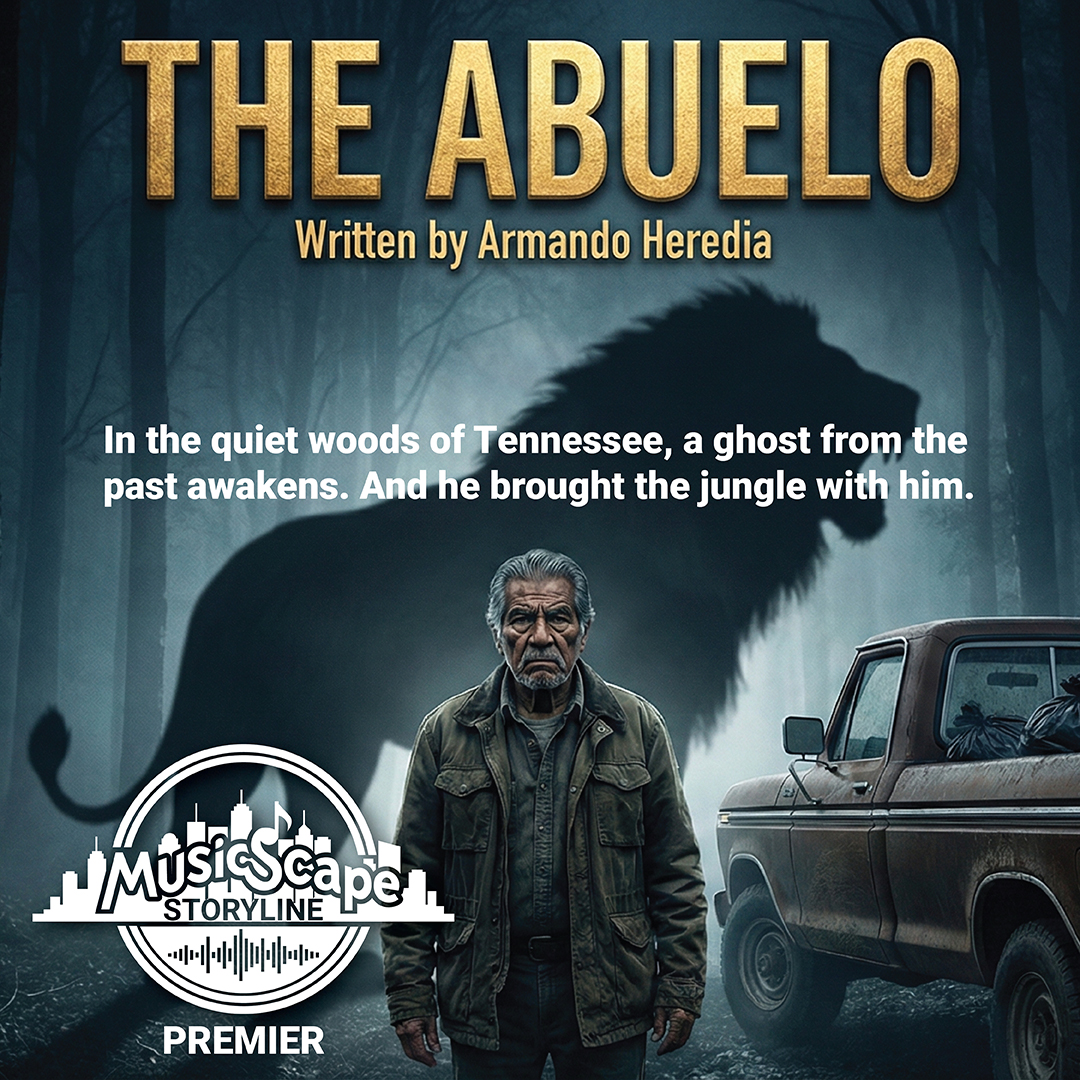
In the quiet, mist-shrouded hollows of Tennessee, an old man tends his land. His name is Abuelo, a gentle grandfather whose world is one of simple routines and hard-won peace. Two thousand miles and a lifetime away, in the neon-soaked underworld stretching from Argentina to Tijuana, a legend whispers: El León de San Pedro—The Lion of San Pedro—a name that once commanded terror. These are not two different men. They are the shattered halves of a single soul, and their violent, poetic reunification is the heart of Armando Heredia’s groundbreaking project, The Abuelo.
But to call The Abuelo merely a “story” would be a profound understatement. It is a deliberate, breathtaking experiment in modern storytelling—a dual-format experience that forces us to reconsider the boundaries between literature and music, between reading and listening. This is not an audiobook with background music; it is a fully synthesized artistic product where a 46-page narrative poem and a 36-minute Latin cinematic score are designed to be consumed in parallel, each element essential to understanding the whole.
The Blueprint: A Novel in Verse
The literary half of this experience is the print companion, available directly from the author via Lulu.com. Don’t let its slim, pocket-sized profile (a deliberate 4.25″ x 6.875″) fool you. Within its 46 pages unfolds a “lyrical thriller” written with the stark, rhythmic precision of noir poetry. Heredia chooses verse over prose for a crucial reason: pace. This is a story of awakening and annihilation, and the verse form—with its relentless cadence, sharp internal monologues, and rapid cuts—propels the narrative with the kinetic energy of a film score.
We follow Abuelo, whose meticulously constructed 20-year fortress of silence is breached by the most mundane of violations: illegal dumping. A black bag tossed onto his property contains not just trash, but bloody clothes, personal mail, and critical criminal ledgers. In returning it, he sets off a chain reaction that forces the gentle grandfather to descend into his own “darkest cellar” and reassemble the polished, oiled “teeth” of El León.
The language is visceral and spare. Heredia employs repeating choruses like a grim liturgy: “Run all you beasts of the field. Go hide in the darkest corners. The Lion is awake. El León ha despertado.” The bilingual refrain isn’t just poetic; it’s the sound of an identity cracking open, the native tongue of a buried predator re-emerging. The print book is the libretto for an opera of violence—a text meant to be savored for its suspenseful cadence and brutal beauty, even as it lays the flawless groundwork for its audio counterpart.
The Soundscape: A Cinematic Score for a Literary Thriller
If the book is the libretto, then “Musiccape Storyline presents: The Abuelo” is the full orchestral performance. Released on December 6th, 2025, and available to stream now on Apple Music, iTunes, Spotify, and Amazon Music, this 36-minute audio project is categorically filed under Latin. This is no accident. The genre choice is a direct tether to the protagonist’s soul.
The seven-track album mirrors the book’s seven chapters. The driving rhythms, melancholic guitars, and sweeping cinematic textures do not merely accompany the story—they embody its emotional core. The music provides the emotive weight, the tension, and the cultural specificity of El León’s past. When the spoken-word chorus “El León ha despertado” cuts through the score, it’s more than a lyric; it’s a character shift, a transformation scored in real-time. The auditory experience transforms the Tennessee backwoods into a jungle for a new kind of guerilla warfare, where the Latin rhythms underscore a clash of identities and a deadly, tactical intelligence.
A Synergy of Senses
The true genius of The Abuelo lies in the synthesis. Reading the tense, silent standoff in the diner while the audio track builds with ominous, percussive tension is an immersive experience unlike any other. The verse in your hand moves with the meter of the music in your ears. The project’s own keywords—narrative poetry, lyrical thriller, gangster epic, dramatic poetry—point to its hybrid nature. It is all these things at once, using the strengths of each medium to compensate for the other’s limitations. The poetry provides depth and interiority; the music provides atmosphere and visceral punch.
For a deep analytical dive into this innovative format, the podcast The Indie Echo dedicated a full episode to unpacking The Abuelo’s structure, themes, and its implications for modern storytelling. The episode brilliantly dissects the “cost of identity” at the story’s core—the terrifying paradox that to protect the peace he earned as Abuelo, the man must become the very monster, El León, he spent decades trying to erase.
How to Experience The Abuelo
To fully step into this haunting, high-stakes world, you must engage both senses:
- The Audio Experience: Stream “MusicScape Storyline presents: The Abuelo” on Apple Music, iTunes, Spotify, and Amazon Music. Listen with focus, as you would a film score.
- The Literary Companion: Purchase the essential print book, The Abuelo, directly from Lulu.com. Read it actively, hearing the score in your head, or read while listening for the intended, parallel journey.
Armando Heredia hasn’t just written a story; he has architected a feeling—the chilling growl of a past that won’t stay buried, the rhythmic pulse of impending violence, and the profound melancholy of a man who must destroy his peace to save it. The Abuelo is a bold, brilliant case study in the future of narrative, proving that the most powerful stories aren’t just told or heard, but are orchestrated.