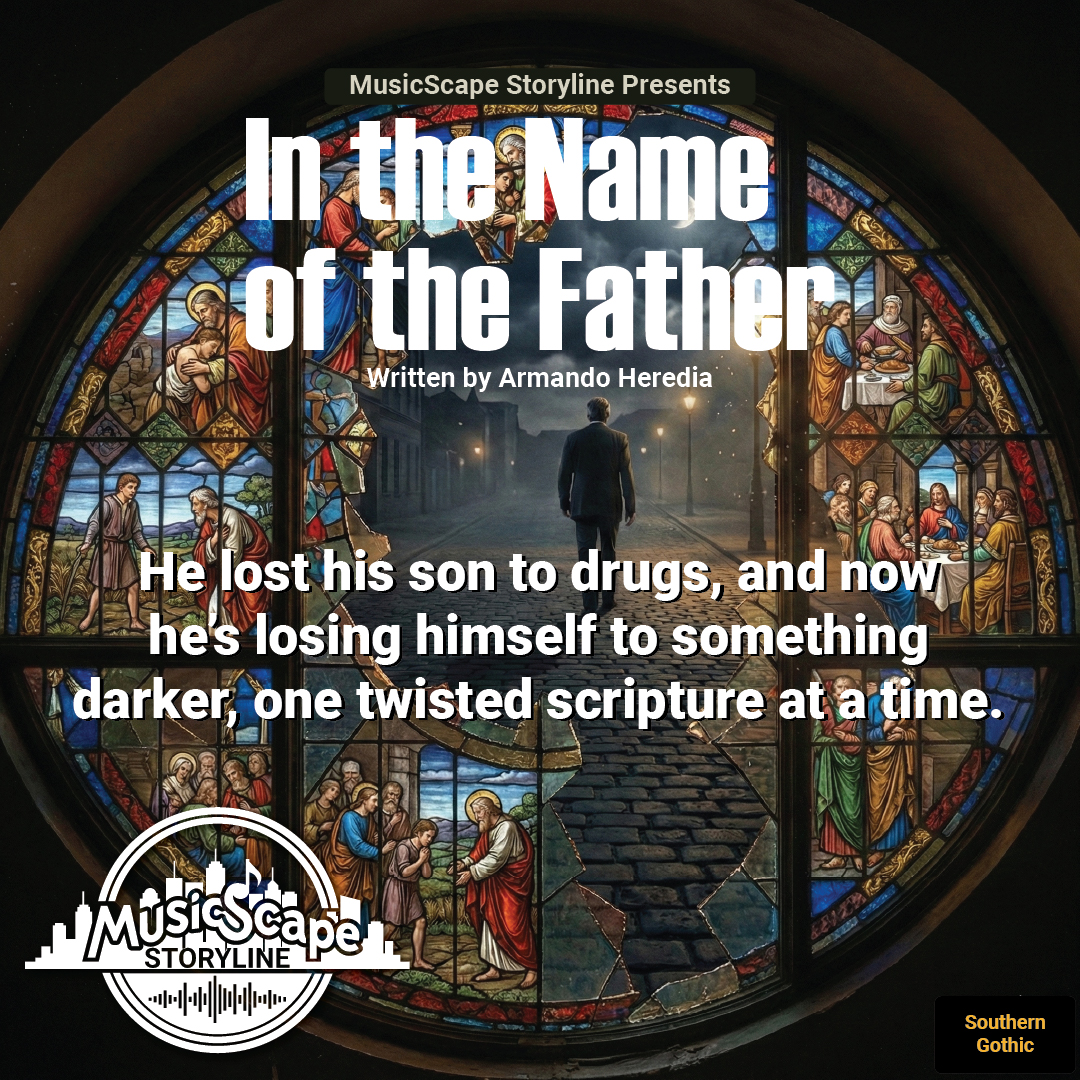
They say grief acts like a mirror—it shows you who you really are. But for the protagonist of In The Name of the Father, grief isn’t a mirror. It is a map. A map that leads away from redemption and straight into the heart of darkness.
We often tell stories about justice. We love the narrative of the wronged man settling the score. But In The Name of the Father is not an action movie. It is a psychological horror story set to music, exploring what happens when a man of God decides to do the Devil’s work—and convinces himself it’s holy.
The Breaking Point
The story begins with a nightmare that is all too real for many families: a phone call, silence, and a son found dead in an abandoned building. The protagonist is a pastor, a man whose life is built on words, verses, and comfort. Yet, when faced with the overdose of his only child, he finds that scripture offers no solace.
Instead, a “different kind of grief” takes root. It twists his heart and makes breathing hard. This isn’t just sadness; it is a physical deformation of the soul. The brilliance of this MusicScape Storyline is how it captures that precise moment where sorrow curdles into rage. He remembers the night ten years ago when he found his son with “friends” and a cloud of smoke —the moment the door was opened to the addiction that would eventually kill his boy.
Just remember: when you stare into the abyss, it doesn’t just stare back—sometimes, it prays with you.
The Architecture of Madness
What makes this story so chilling isn’t the violence itself—it’s the logic behind it. The father doesn’t abandon his faith; he weaponizes it. As he drives “a million miles” across mountains and oceans, he begins to rewrite his own theology.
He takes the Word he hid in his heart and “carefully worked through / Changing the meaning / Until what he wanted was what was true” . He convinces himself that he is not a murderer, but “the anointed”. He tells himself, “I am Vengeance / Thus saith the Lord”.
This is the psychological hook that grabs you: the terrifying clarity of the fanatic. He believes he is on a mission “to do the Lord’s work”, turning his vigilantism into a perverse form of evangelism where he visits the wicked with destruction.
The Three Targets
he narrative pulls no punches as the father hunts down the three men he holds responsible for introducing his son to drugs. Each encounter is a study in different shades of human failure:
- The Musician: Found playing the same tired tune in a bar, he is the first to fall, realizing too late that the man from “ten years ago” is a man of his word.
- The Dealer: Confronted in a park full of “zombies,” he is forced to consume his own poison—a brutal reaping of what he has sown.
- The Preacher: Perhaps the most haunting target. A man who found religion and became a “celebrity preacher,” seemingly redeemed, yet hiding a past he never atoned for. The protagonist sees through the “perfectly sculpted hair” and the “five-hundred-dollar suit” to the hypocrisy underneath.
The Final Verdict
In The Name of the Father forces us to ask uncomfortable questions about the nature of justice. Is it justice when the judge, jury, and executioner is a grieving father with a broken mind?
The story culminates not in redemption, but in a terrifying open-ended commitment to violence. After exacting his revenge on the three men, the father realizes “The Word says seventy times seven / And I’ve only brought judgement to three”.
The final prayer, “Lord, here am I / Send me”, chills the blood. It is a distortion of the prophet Isaiah’s call, turned into a vow of eternal vigilantism.
Experience the Narrative
This is not just a collection of songs; it is a lyrical thriller that drags you into the passenger seat of a madman’s car. It is visceral, uncomfortable, and impossible to turn away from.
If you are ready to walk the line between faith and madness, listen to In the Name of the Father. Just remember: when you stare into the abyss, it doesn’t just stare back—sometimes, it prays with you.
Listen on Apple Music | Spotify | Amazon Music